
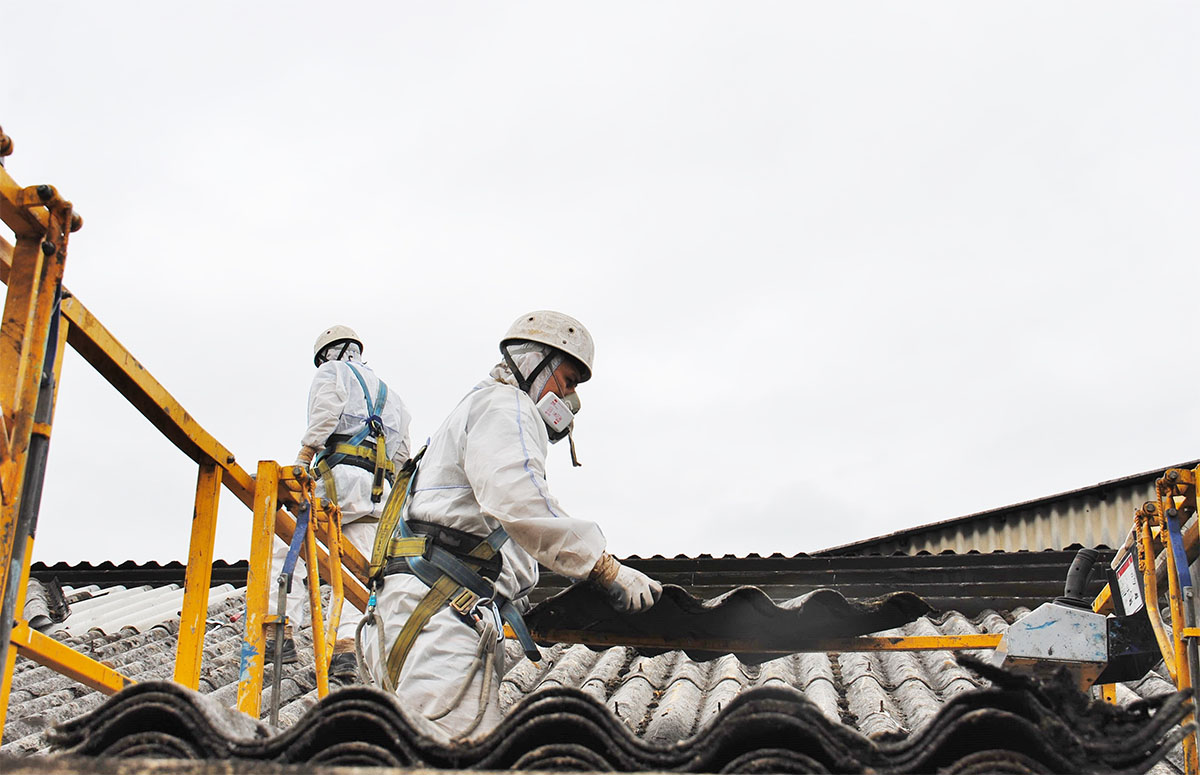
Wanting asbestos containing materials immediately removed is an understandable reaction to discovering their presence in your property or place of work. The risks are many and the benefits of leaving them in place can seem few. However, in some cases, asbestos can be safely managed without removal following a thorough assessment of the material, the site, the conditions, and the future of the property.
But when exactly is this appropriate and does this apply to you? Cordtape Environmental explains below.
When is asbestos a risk?
Asbestos is primarily a risk when the asbestos-containing material (ACM) is disturbed.
If undamaged or undisturbed, asbestos containing materials are rarely dangerous.
However, even relatively minor work such as drilling, rewiring, installing lighting, replacing ceilings, or removing walls can disturb hidden ACMs and release hazardous fibres into the air.
You should always check the condition of materials with asbestos surveyors and never assume the site is safe without professional assessment.
What happens when you disturb asbestos?
When ACMs are disturbed, fibres are released into the air. Once inhaled, they have no natural way of exiting the body and will remain in the lungs, heart, and even stomach indefinitely. This is what makes asbestos so dangerous.
Over time, potentially fatal health conditions can develop.
Asbestos related diseases do not develop overnight. Symptoms can take decades to appear. Although short term asbestos exposure still poses a risk, you are more likely to develop associated diseases if you have experienced prolonged or repeated exposure. For this reason, construction workers, firefighters, industrial workers, and tradespeople are often most at risk.
When is asbestos removal necessary?
Finding asbestos in a property does not automatically mean it needs to be removed immediately. In many cases, asbestos can be safely managed in place. However, there are situations where removal becomes the safest and most practical option, particularly when the material is damaged, deteriorating, or likely to be disturbed.
The key factor is always the risk of fibre release. If asbestos-containing materials (ACMs) are in a condition where fibres could become airborne, professional assessment and removal may be necessary to protect occupants, workers, and anyone visiting the property. For a full overview of the removal and disposal process, see our guide on how to get rid of asbestos.
Situations when asbestos removal is necessary
Asbestos removal is necessary when:
- The asbestos material is damaged, cracked, or deteriorating
- Fibres are likely to be released into the air
- Renovation or demolition work is planned
- The material is located in a high traffic or easily disturbed area
- The asbestos is friable (easily crumbled by hand pressure)
- Previous repairs or encapsulation have failed
- There is evidence of repeated disturbance or ongoing deterioration
- The building contains vulnerable people (hospital, school, care home)
High risk asbestos containing materials
Certain asbestos materials are considered higher risk than others because they contain a greater percentage of asbestos and release fibres more easily when disturbed. These include:
- Asbestos insulating board (AIB)
- Pipe lagging
- Sprayed asbestos coatings
- Loose fill insulation
These materials require licensed asbestos contractors to remove them safely under controlled conditions.
Domestic properties
In homes, asbestos removal is frequently required during refurbishment projects. Older properties may contain asbestos in ceilings, partition walls, textured coatings, floor tiles, pipe boxing, or garage roofs.
For example, a homeowner renovating a 1970s property may discover asbestos insulating board behind a fuse box or within an airing cupboard. While the material may have remained undisturbed for years, renovation work suddenly creates a significant risk of fibre release.
In domestic settings, professional surveys are particularly important because asbestos is often hidden beneath modern finishes or concealed within structural elements.
Removal may also become necessary if:
- Water damage has weakened asbestos materials
- DIY work has accidentally disturbed ACMs
- The asbestos is located where children or occupants could damage it
- Future maintenance access is required nearby
Commercial properties
Commercial buildings carry additional responsibilities under the Control of Asbestos Regulations 2012. Duty holders, landlords, facilities managers, and employers have legal obligations to identify and manage asbestos risks within non domestic premises.
Removal may be necessary if:
- Employees or contractors are at risk of exposure
- Building work could disturb ACMs
- Asbestos is deteriorating in occupied areas
- The material cannot be safely managed long-term
- Compliance obligations require land remediation before refurbishment or demolition
When is asbestos removal not necessary?
Contrary to popular belief, asbestos does not always need to be removed. In fact, removing asbestos unnecessarily can sometimes create more risk than leaving it safely in place.
If asbestos-containing materials are in good condition, sealed, and unlikely to be disturbed, they can often be managed safely through regular monitoring and appropriate controls. This approach is known as asbestos management in situ and is widely used in both residential and commercial buildings.
Removal is often not necessary when:
- The asbestos material is undamaged and stable
- It is sealed, enclosed, or encapsulated
- The material is unlikely to be disturbed
- No refurbishment or demolition work is planned
- The ACM is located in a low risk area
- A management plan is in place
What are the risk factors of leaving asbestos undisturbed?
Although asbestos can often remain safely in place, this does not mean it should simply be ignored. Materials can deteriorate naturally over time, particularly if exposed to moisture, vibration, impact, or poor maintenance conditions.
Potential risks include:
- Gradual deterioration releasing fibres
- Accidental disturbance during future work
- Lack of awareness among contractors or occupants
- Hidden damage behind walls or ceilings
- Unforeseen disasters like fires and floods
What are the alternatives to asbestos removal?
In both domestic and commercial properties, there are several alternatives that can safely control asbestos risks while minimising disruption and cost.
Encapsulation
Encapsulation is one of the most common alternatives to asbestos removal. This involves sealing or covering the asbestos material to prevent fibres from escaping into the surrounding environment. Specialist coatings, protective wraps, or boarding systems may be applied to create a durable barrier around the material.
This approach is often suitable when asbestos is undamaged and unlikely to be disturbed in the future. Encapsulation is commonly used for asbestos insulating board, pipe insulation, and ceiling materials that remain in good condition.
Managing asbestos in place
Many asbestos materials can remain safely in place for years if properly monitored and managed. This is known as management in situ and is widely used in commercial buildings, schools, offices, and older residential properties.
This is very rarely offered as the risks often outweigh the benefits.
Restricting access
Where asbestos is located in low use or controlled areas, restricting access can also form part of a safe management strategy. This is common in plant rooms and maintenance areas where limiting access reduces the likelihood of accidental disturbance.
When alternatives are not suitable
Although these management strategies can be highly effective, they are not appropriate in every situation. If asbestos is damaged, deteriorating, releasing fibres, or likely to be disturbed during refurbishment or demolition work, removal may still be necessary.
Ultimately, the safest approach depends on the type of asbestos material, its condition, where it is located, and how the building will be used in the future.
Why professional assessment is essential
There is no universal answer when it comes to asbestos management. Materials that appear harmless may still present risks, while some asbestos-containing materials can remain safely in place for many years.
Professional asbestos surveys and sampling help determine whether removal, encapsulation, enclosure, or ongoing management is the most appropriate option.
What to do if you find asbestos on your premises
If you suspect that you have ACMs on your premises, it’s important to take immediate action to ensure the safety of you and anyone with access to the site.
1. Don’t disturb it: Asbestos is most dangerous when it is disturbed. Don’t attempt to remove or repair the material yourself.
2. Hire a professional: Get in touch with a licensed asbestos removal specialist who can safely assess, test, and remove any ACMs.
3. Get an asbestos survey: If you live in an older property, having a professional asbestos survey conducted can help you identify hidden asbestos risks.
4. Ensure safe disposal: Asbestos should only be removed and disposed of by certified professionals to ensure it is handled and disposed of safely.
At Cordtape, we can assist you with locating and identifying Asbestos Containing Materials on your commercial premises with our Asbestos Survey and Sampling service. If we do locate the presence of asbestos, our Asbestos Removal team will extract it from your premises in accordance with Control of Asbestos Regulations 2012.
Our team is fully qualified to manage all aspects of asbestos assessment, removal, refurbishment and waste management so you don’t need to live in fear of the risk this dangerous material poses.
Contact us today.
Email: info@cordtape.co.uk
Phone: 0800 093 7810

