
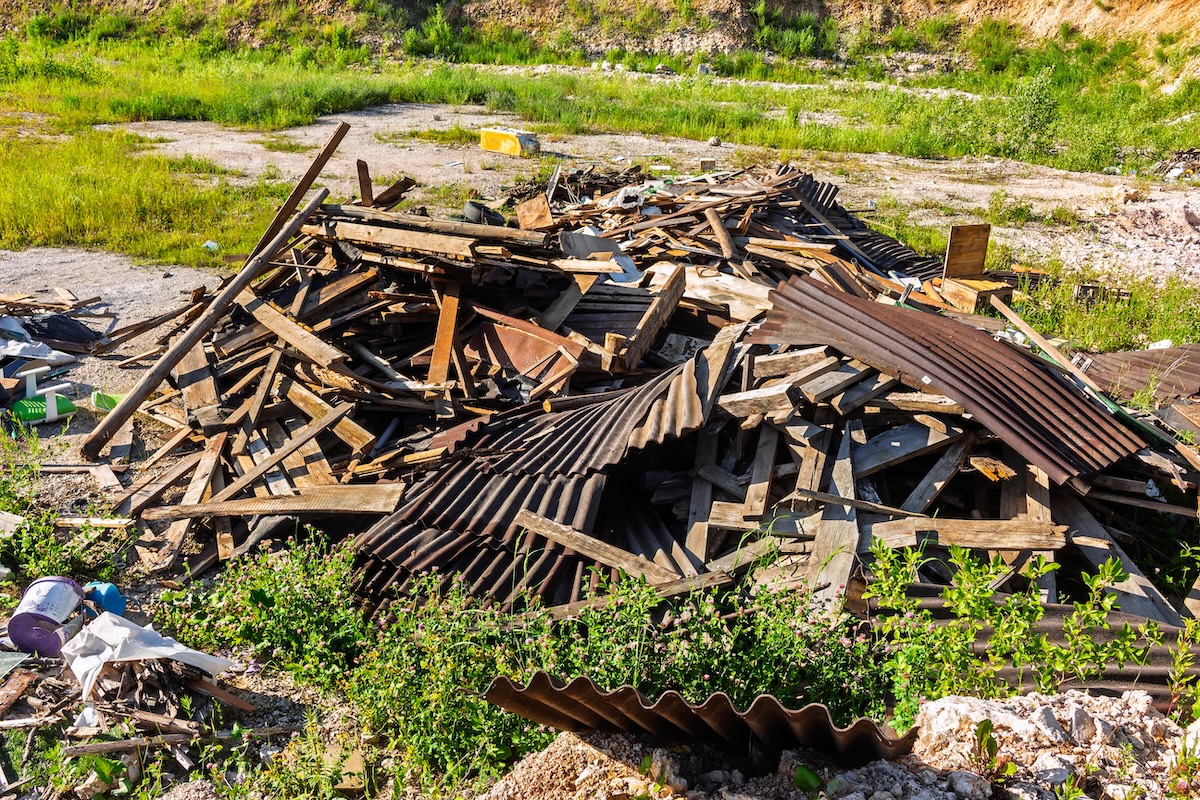
Human health risks from inhaling asbestos fibres are extensively established, while the behaviour and ecological consequences of asbestos in soil and water are still being investigated. Recent research has highlighted that asbestos fibres can move through soil and water, but the precise environmental pathways and wider ecological implications are not yet fully understood. So what do we know?
At Cordtape Environmental, we help property owners, businesses and contractors understand the risks associated with asbestos, including what needs to happen when ACMs need to be removed and disposed of safely.
Why is asbestos harmful to the environment?
Asbestos is a naturally occurring mineral made up of microscopic fibres. Its resistance to heat, fire, chemicals and physical deterioration made it useful in thousands of products, particularly throughout the 20th century.
Those same characteristics create a significant environmental challenge.
Unlike many ordinary building materials, asbestos does not simply biodegrade and disappear. Asbestos containing products can remain in place for decades, and deterioration or disturbance can release fibres or fragments into the surrounding environment. These can interfere with ecosystems and cause harm to animals should they get into their lungs or stomachs.
Where can asbestos contamination occur?
Asbestos contamination can potentially affect several environmental areas:
- Air: Disturbing ACMs can release microscopic fibres that become airborne.
- Soil: Broken asbestos containing materials, demolition debris or illegally dumped waste can introduce asbestos fibres and fragments into the ground.
- Water: Rainfall, runoff and the movement of contaminated soil can provide pathways for asbestos fibres or particles to move through water.
- Construction sites: Poorly identified or improperly removed ACMs can contaminate demolition and construction waste.
- Waste streams: Mixing asbestos with general waste can spread contamination to skips, vehicles, transfer areas and other materials.
- Previously contaminated land: Historical industrial activity, demolition or poor waste disposal can leave asbestos containing material in the ground for many years.
Why is asbestos dangerous?
Asbestos becomes dangerous when microscopic fibres are released from damaged or disturbed ACMs.
These fibres can be extremely small and may not be visible to the naked eye. If asbestos containing material is cut, drilled, sanded, broken, damaged or otherwise disturbed, fibres can become airborne and potentially inhaled.
How does asbestos enter the environment?
Asbestos can enter the environment through both natural processes and human activity. For property owners and construction professionals, the most relevant sources are usually associated with older buildings, refurbishment, demolition and waste disposal.
Common routes include:
1. Deteriorating asbestos containing materials: Older asbestos cement roofing, cladding, pipes, panels and other products can deteriorate over time. Weathering can contribute to the release of fibres and fragments.
2. Refurbishment and renovation: Drilling, cutting, sanding or removing ACMs without appropriate controls can release asbestos fibres.
3. Demolition: Demolition can create significant quantities of dust and debris if asbestos containing materials have not been identified and appropriately managed beforehand.
4. Poor asbestos removal: Removing asbestos without suitable procedures can transfer the problem from the building into the surrounding environment.
5. Improper waste disposal: Asbestos waste that is placed in general skips, household bins or unsuitable disposal routes can become damaged and release fibres or fragments.
6. Illegal dumping: Fly tipped asbestos can contaminate land and create a hazard for members of the public, contractors, landowners and anyone who later encounters the waste.
7. Historical contamination: Older industrial sites, buildings and areas where asbestos was previously used or disposed of can retain contamination long after the original activity has stopped.
Recent research has also examined how asbestos fibres can move between soil and water, including the potential for rainfall, erosion and surface water movement to transport fibres or contaminated material. The extent and significance of these pathways can vary considerably depending on site conditions.
Can asbestos pollute the air?
Airborne asbestos is one of the most important environmental concerns because inhalation is the principal route through which asbestos exposure can cause serious disease.
An intact asbestos containing material may not release significant amounts of airborne fibres under normal conditions. The situation can change considerably if the material is disturbed. For example, cutting an asbestos board can generate dust containing fibres. Breaking asbestos cement can create fragments and dust. Poorly controlled demolition can disturb ACMs over a much larger area.
Does asbestos harm wildlife?
The effects of asbestos on wildlife and ecosystems are less well established than the effects of airborne asbestos exposure on human health.
There is growing research into the presence and movement of asbestos fibres in soil and water, but the scientific understanding of how environmental asbestos affects aquatic ecosystems, plants and wildlife remains limited.
If asbestos containing waste is allowed to enter soil or water, it creates an additional environmental management problem and potentially creates exposure pathways that may be difficult to identify or control. This makes responsible asbestos management particularly important: preventing unnecessary release in the first place is preferable to trying to deal with contamination after it has occurred.
How does improper asbestos disposal cause environmental damage?
Removing asbestos from a building does not automatically make the problem disappear. The material has to go somewhere, and if it is handled incorrectly, the removal process can simply transfer the risk from the building to the surrounding environment.
For example, imagine an asbestos containing roof sheet being removed from an old building.
If it is broken, thrown into a general skip, transported with ordinary construction waste, and sent to an unsuitable facility then the environmental risk can be significant. However, if it is carefully removed, appropriately packaged, correctly transported, and then sent to an authorised disposal facility then the risk can be controlled.
Improper asbestos removal can include:
- Putting asbestos into household bins
- Putting asbestos into a standard construction skip
- Breaking ACMs to make them fit into containers
- Leaving asbestos waste exposed outside
- Dumping asbestos on vacant land
- Mixing asbestos with general demolition waste
- Transporting asbestos without appropriate controls
- Giving waste to an unsuitable or unauthorised waste carrier
- Failing to use an appropriate disposal facility
Can environmental asbestos contamination be cleaned up?
The appropriate response depends on the nature and extent of the contamination.
The priority should always be to prevent contamination from occurring in the first place. Once asbestos has entered soil or another environmental medium, remediation can be more complex, potentially requiring specialist assessment, controlled removal of contaminated material and appropriate waste disposal.
The response may involve:
- Assessing the suspected contamination
- Establishing the extent and nature of the material present
- Restricting access to affected areas
- Preventing further disturbance
- Developing an appropriate remediation strategy
- Removing asbestos containing material where necessary
- Managing contaminated soil or debris appropriately
- Transporting and disposing of asbestos waste through the correct route
- Carrying out appropriate verification or clearance procedures where required
If you have found asbestos on your property that requires professional disposal, you can count on Cordtape Environmental Services. We can assist you with locating and identifying Asbestos Containing Materials on your commercial premises with our Asbestos Survey and Sampling service. If we do locate the presence of asbestos, our Asbestos Removal team will extract it from your premises in accordance with Control of Asbestos Regulations 2012.
Our team is fully qualified to manage all aspects of asbestos assessment, removal, refurbishment and waste management so you don’t need to live in fear of the risk this dangerous material poses.
Contact us today.
Email: info@cordtape.co.uk
Phone: 0114 243 1239


